Thursday, December 1

La Paz and The World's Most Dangerous Road


At 3650m La Paz is the highest capital city in the world, and we certainly feel the affects of the thin air as we walk up the steep hills to take this photo (Click photo to enlarge)
From Cochabamba we continue north to La Paz. The bus ride is delayed a few hours as we follow Tour de Bolivia over the mountains, but the journey provides some incredible views of the countryside and the people living in it (unfortunately the photos through a dirty bus window didn't turn out so well). 

Plaza Murillo, La Paz
Arriving in La Paz at night, we see the huge city of lights clinging to the hillsides and sprawling down the valley. Our long journey behind us we settle in for a HUGE delicious pizza down the street and straight to bed - doing nothing all day on a bus is hard work!

Witches market, La Paz
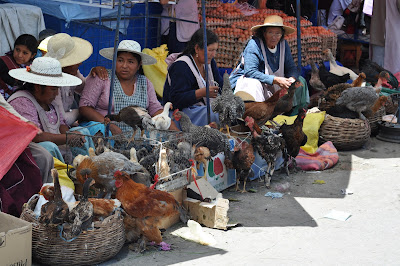
The next day La Paz turns on the weather for us and we set out to explore in the sunshine. The city is quite beautiful in parts and fun to explore with numerous markets selling everything from llama fetuses to alpaca jumpers (yes I bought one. Someone has already kindly pointed out it will be great for the next dress up party. I can go as David Bain). 

The smaller and taller your bowler hat, the better.
Steep streets of La Paz
The 'must do' tourist attraction in La Paz is the bike ride down 'The World's most Dangerous Road'. Arriving in La Paz I was fairly certain there was no way I was going to do it, and was trying to convince George it wasn't a great idea either. Mike presents a fairly compelling argument here. But somehow or another (and after a thorough read of our insurance terms and conditions) I get sucked in and find myself up early on our second day in La Paz to head up to the start of the road.

The view from the top. We take the road on the left.
As it turns out, George and I are the only people riding with our company on the day and I feel more comfortable straight away - I won't be dragging the chain too much if I am clenching the brakes the whole way down! It is a perfect morning and the snowy mountains in view are amazing. Kitted out in full mountain-bike attire, we head off on our way down the 64km decent from 4700m down to 1100m.

Extreme biker George
And less extreme Nic
My fears disappear as we wind our way down the first section of the road. It's a windy but not too steep sealed road with a huge valley below. We have ridden the 31km on sealed road in no time and it is time to tackle the 'real' death road.

A stop for a snack at the end of the sealed road.
With images of Mike lying in a hospital bed on our minds we take it pretty easy, but relax into things and enjoy the ride down into the jungle through waterfalls crossing the road. Parts of the road are incredibly narrow for the few vehicles that we see along the way and it is easy to see how the road earned its name, with huge vertical drops (white crosses mark the really steep bits) nearly the whole way down.


The famous balcony. We are on the edge if you look closely.

It's with relief that we round the last corner and arrive at the bottom, safe and sound with a shower, pool and lunch awaiting for us. The climate has changed dramatically in 3 hours from a near freezing morning at the start to a very humid and hot jungle at the end.  We have survived death road, which is lucky because we have a plane to catch the next day to the Bolivian Amazon!

This little guy gave me a congratulatory hug at the end of the road

Wednesday, November 30

Potosi & Cochabamba


Amongst a number of things, Bolivian buses have the annoying habit of arriving at awful hours of the morning, usually 2 or 3am. In Argentina and Chile they have a better system, with buses departing at such a time that you arrived around 8 or 9am the next day. In this way the bus doubled as accommodation, which is perfect for traveling cheaply. In Bolivia you end up checking into a hostel for a few hours until sunrise. I suspect there's an underhand agreement in place here to spread the tourist dollars around further.

Of course it's all put in perspective when you get up later the same morning and find a cafe serving breakfast of coffee, juice, cereal, fruit and yoghurt, toast and eggs and the bill comes to a bit under $3. And so we find ourselves in this position in Potosi, 5 hours north of Uyuni (where we finished our 4WD tour).  

Cerro Rico looming over the city of Potosi
Potosi has a number of claims to fame. At 4100m it's the highest city in the world. But it's more notable for the part it played in bankrolling the Spanish Empire during the 1600s. Looming over the city, Cerro Rico (meaning Rich Hill) was once the largest silver mine in the world. At its peak the mine was producing 15 tonnes of pure silver every day. Supposedly its total output was enough to build a solid silver bridge all the way to Spain. In its heyday, Potosi was the biggest city in the Americas and of similar size to London or Paris. The Spanish pressed the indigenous people into the mines, drawing on Africa for slaves when local numbers dwindled, and forced workers to spend 12 hours below ground at a stretch in appalling conditions. It's estimated that nearly 8 million workers died over a 300 year period. Predictably the silver dried up and now the population has dwindled to a fraction of its peak.

Nic with a stick of dynamite bought over the counter for $2 at the corner store
The city still retains the grandness of its boom times, but now the mine only yields less profitable tin and zinc. As an alternative economy a number of companies run tours through the mines for anyone with enough curiosity. We opted for a two hour tour - two hours more than I needed to spend underground. Nearly always doubled over at the waist, at times crawling on our stomachs, climbing up rickety ladders and passing beneath dubious wooden framing, we make our way 2km into the bowels of Cerro Rico. All the while we feel and hear explosions rattling around us and have to press ourselves against the shaft walls as trolleys rattle back and forth. Our tour guide, recently retired from the mine himself (his father and brother had both died underground), is something of a hero with the miners. Offering them gifts of dynamite and alcohol that the group purchased before entering, he gets their account of working life in the mines, which are universally depressing.


At 4600m the air is thin enough without entering a badly ventilated mine. I'm panting the entire tour and the relief is overwhelming at the light appearing from the other side of the mountain. To round out the tour, our guide gives us a lesson from the Al Qaida playbook: Bomb-making 101. It's all a bit ridiculous but we stand around blithely trusting him completely as he blows away part of the hillside. Will post the video of the madness when we find speedy internet.

Palpable relief
Dirty, tired and blinking at the daylight

More weary and forlorn looking miners
Afterwards we pay a visit to the Mint Museum. It's really interesting, but worth a mention mostly because at the end of our tour the guide asks for a native English speaker to proof read the new museum brochure. From an informal survey of terribly translated hoardings and brochures across Asia and South America, I've often thought there was a huge market for this kind of service. I spend an hour editing and I'm surprised when she offers to pay me at the end, though I write it off as pro-bono; my new consultancy needs her more than the Mint Museum needed the third person passive. Finally an all important foot in the door and a burgeoning portfolio of one. 


On the roof of San Francisco church, Potosi

Panorama of Potosi - click on the image to enlarge
Leaving Potosi we head to Cochabamba, against the recommendation of a friend of mine who described it as 'dangerous and a shithole'. Our own experiences were mixed; with only a day to explore we wander through sprawling markets, discover a well-stocked book exchange and spend the afternoon in a quiet plaza reading and snacking on empanadas. It's only when we come to leave the next day that we see Cochabamba's other face.

The Cochabamba market has everything you never really needed and more
When finished competing in the local race derby at night, Jorginho returns to its humble bus day duties  
In the bus station bound for La Paz, seemingly from nowhere, a crew of agents bearing Interpol ID converge on us. Of course we've been warned of these tactics; they show flimsy ID, demand to see your passport and then confiscating it, drag you to their offices where they search your bags and help themselves to anything of value. It's all so implausible that with the benefit of hindsight it's hard to imagine even the naivest traveller being fooled. Why Interpol would bother staffing a bus station in a Bolivian backwater or adorn its agents in knock-off jeans and polos is hard to rationalise, amongst any number of credibility issues. If only my spanish extended far enough to ask as much. But there's something about the audacity of the confrontation and an upbringing based on respect for the police that stops you short of saying f*** off.

Cristo - 33cm taller than Rio's. Ha!
When we try to shrug them off, they drag over their cronies staffing the security office and circle us. Neither of the 'security guards' look older than 17,  they're both wearing uniforms several sizes too big for them and one is wearing a pair of white sneakers. Our bus is leaving in 15 minutes and we reluctantly give them a glimpse of our passports to speed things up - in firmly clenched hands. The situation some how sorts itself out as we resolutely refuse all their requests - their initial pretense was always pretty vague - and they disappear as quickly as they came. We board the bus shaking our heads in disbelief, having survived tourist scam Bolivia.

La Paz and Death Road to come...

xN&G

Saturday, November 19

Tupiza to Uyuni (and the salt flats)

Last day on the salt flats by which point I've obviously spent too much time around flamingos
Meeting up with Tom & Michelle, a British couple we'd first met in Torres del Paine we head to Tupiza, 10hrs and 300km south of Sucre. A return to relative bus comfort. We catch the briefest of sleeps before Berto, our tour guide for the next 4 days of 4WD exploring, shows up in the landcruiser.

It's not until you get to a place like Bolivia that altitude becomes as much a consideration in your every day travel plans as currency conversions or the next sugar fix. At 2950m, Tupiza is comparatively low but that changes quickly as Berto charges up the dirt road to Quebrada de Palala peaking at around 4600m. I've had problems with altitude sickness in the past and Nic has stocked up on pills for us both but still the headaches take effect immediately. We swallow a few more and thankfully it's soon only the lack of air giving us problems.

At the top of Quebrada de Palala
Hours away from anything resembling a shop these tiny towns defy the bleak outlook


I'll cut you a deal. My wooly jumper for your sandwich.
We stop for lunch on the first day in an open paddock where llamas are grazing. Grazing what I'm not exactly sure, there's nothing much but bare earth. In the truck we also have Berto's mum along for the ride. She is dressed in the traditional Bolivian style with plaits, pinafore and pleated skirt and she immediately adopts the four of us (insisting we call her mama). Neither mother or son speak English but they're both friendly and smiley people and speak in slow, simple Spanish for us. Mama is also our cook and soon whips up a delicious spread.

Arriving on day 1 at camp, San Antonio de Lipez, 4600m. Dinner is tasty and huge, and mama looks offended when we don't manage to eat it all. 


It's a 5am start on day 2 and we're into the truck just before sunrise. At this altitude it's impossible to be wearing the right amount of clothing for more than 20 minutes. The sunshine is searing, but any hint of wind or shade and the temperature swings below zero. We find ourselves continually stripping off and then quickly pulling jackets back on.

Laguna Verde, 4300m. Very misleading photo - weather looks warm and the water inviting. I'm freezing in the wind and out of the truck for the photo and no more. The water is full of arsenic.
Geysers at 5000m
And next to the geysers are these blocks of ice. Very weird.
Laguna Colorada - more amazing coloured lakes
Pulling into our camp spot on the second evening we settle down for a cold night at 4300m. We've been lugging our sleeping bags around since our time in Patagonia and the burden pays off. In one of the other jeeps staying at the same spot they'd forgotten to pack any for their guests. It's a cold night for these few and wheezy and airless night for all. But mama's made pancakes in the morning and everyone is happy.

Tree rock on day 3


We pass by flamingos and bizarre rocky outcrops, active volcanos and tired army outposts, abandoned railway lines to nowhere and spongey coral-like plants. It´s a weird and wonderful place.

Mama appraises Berto's tire changing technique


Sunrise on the Salar
On our final night we opt to stay at one of the salt hotels on the fringe of the salt flats. The novelty here is that it is constructed almost entirely from salt. Unfortunately it's a bit of a letdown because the cooking is not nearly as good as mama's and our group appears to be forgotten until 9.30 when they remember to serve dinner. But worst of all is the manager's 6 year old daughter who is running errands for the devil, tormenting guests and causing mayhem. When we're out the door at 5am the next morning this is all quickly forgotten however, because the salt flats are spectacular.


It stretches over nearly 11,000 square km and supposedly contains up to 70% of the world's lithium supply (which sounds like a lot but if the production output of hybrid car batteries was to match that of petrol engines currently, the world supply of lithium would be outstripped by 2015. So much for a sustainable alternative...)


Isla del Pescado, 3700m
We spend some time engineering the obligatory perspective shots (which turns out to be much more difficult than I´d imagined) and then we speed across the flats to the Wild West town of Uyuni. The less said about this place the better.

Thanks Tom and Michelle for the company. Cheque´s in the mail for the photo royalties. Onwards to Potosi!

xN&G